
Genomics Centre Marks 25 Years of Research in Kensington

A major research facility in Kensington has marked 25 years of supporting scientific advances, with the UNSW Ramaciotti Centre for Genomics celebrating its longstanding role in Australian genomics.


Anniversary Event in Kensington

On 17 June 2025, the Ramaciotti Centre for Genomics at UNSW Kensington hosted an event commemorating 25 years since its establishment. The occasion united past directors, senior university leaders, collaborators, and stakeholders.

Attendees included Emeritus Professor Ian Dawes, Professor Vanessa Hayes, and Dr Marjorie O’Neill, Member for Coogee. Representatives from Bioplatforms Australia were present. Current and former staff, Centre’s steering committee members, and other research partners were also in the venue.

Dr O’Neill noted that the Centre demonstrates the long-term benefits of bipartisan investment in science and innovation. This contributes to biomedical and public health capabilities across the state.

Background on the Kensington-Based Centre

The Ramaciotti Centre is located on the second floor of the Biological Sciences South Building (E26) at UNSW in Kensington. It began operations in 2000, following its foundation in 1999. Since then, it has grown into the largest university-based genomics facility in Australia. The facility supports scientific research across various disciplines, including conservation, agriculture, and health.

Scientific Contributions and Reach

The facility has processed more than 1.2 million biological samples and supported over 500 research groups globally. Notable contributions include sequencing the bilby genome in 2024 and supporting a 2018 koala genome study. The Centre also played a role in the ASPREE clinical trial and partnered with the University of Sydney on research addressing prostate cancer health disparities.

Ramaciotti Centre
Photo Credit: Ramaciotti Centre for Genomics/Instagram

Focus on Technology and Sustainability

The Centre was one of the first in the country to carry out large-scale human genome sequencing. This was under the leadership of Professor Marc Wilkins between 2011 and 2022. The Centre consistently adopted emerging genomic technologies while maintaining a sustainable operational model. Its integration of innovation and practical delivery has made it a central part of the national research infrastructure.

genomics research
Photo Credit: Ramaciotti Centre for Genomics/Instagram

Commitment to the Future


Current Director Associate Professor Martin Smith stated that the Centre will continue adapting to advances in genomic science. Its future focus will include precision medicine, sustainable agriculture, and environmental resilience. UNSW leadership reaffirmed their commitment to the Centre’s evolving role in supporting science outcomes nationally and globally.

Published 19-June-2025

NIDA Raises Concerns Over UNSW’s Proposed Expansion in Kensington

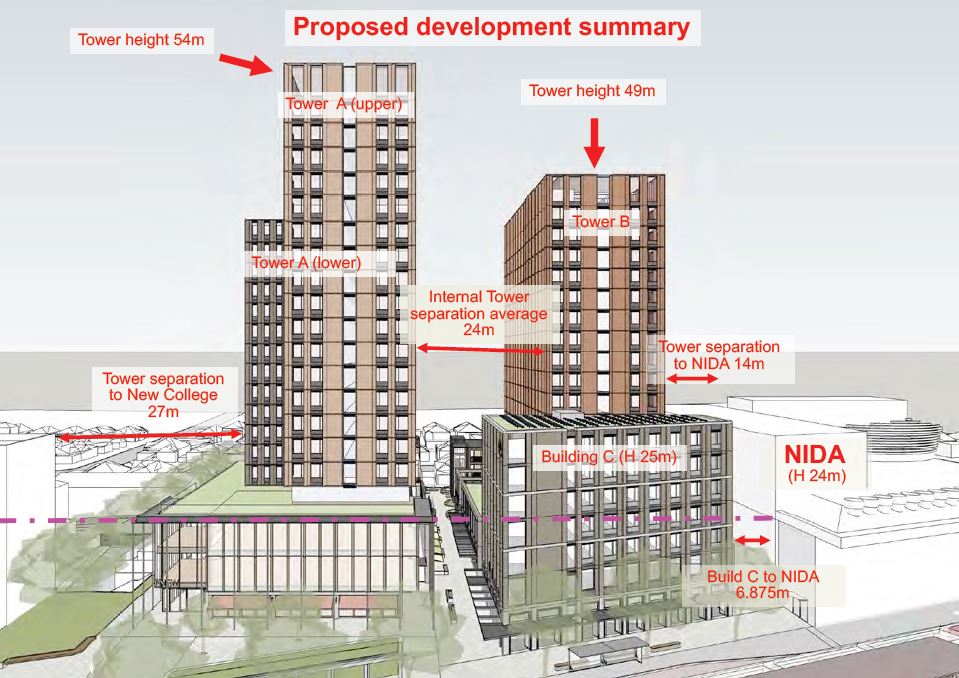
The National Institute of Dramatic Art (NIDA) in Kensington has expressed concerns regarding the University of New South Wales (UNSW) expansion plans. The proposed development would add 881 new student rooms opposite NIDA’s main entrance.


Read: New SkyParks in Kensington to Enhance UNSW Learning Spaces


NIDA CEO Liz Hughes has stated that the development could significantly impact the institute’s operations. The organisation estimates that associated costs could represent more than a third of its annual budget and potentially affect the use of several teaching spaces.

The project’s origins trace back to May 2023, when UNSW submitted a Development Application for the redevelopment of its Western Car Park on Anzac Parade. 

NIDA
Proposed development (Photo credit: nida.edu.au)

The initial proposal for 1,066 rooms across five buildings, with structures up to 23 storeys tall, has since been revised. Following input from Randwick Council and the Sydney Eastern City Planning Panel, the current plan includes 881 rooms, with the tallest buildings reduced to 16 storeys.

NIDA reports that UNSW is set to lease the adjacent car park site to property developer Iglu for 99 years, in a deal reportedly worth $168 million. The proposed development on this site is expected to include not only student accommodation, but also commercial and retail spaces.

Ms Hughes has requested that the panel defer its decision and refer the application to NSW Planning Minister Paul Scully for additional review. She cited potential implications for NIDA’s future operations as the reason for this request.

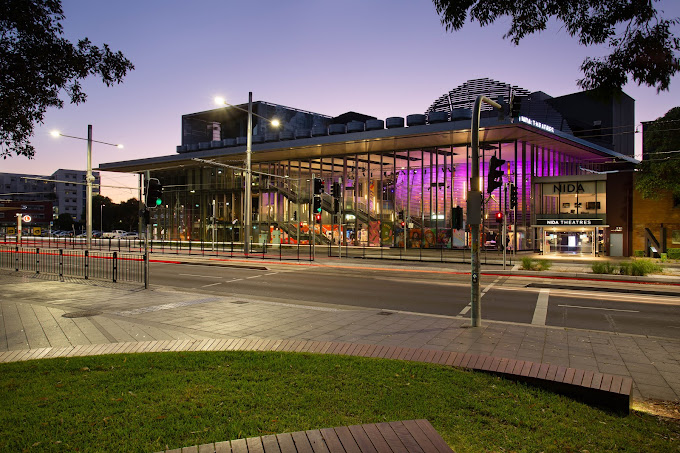
NIDA
Photo credit: NIDA – National Institute of Dramatic Art/Google Maps

NIDA’s concerns include the loss of nearby drop-off zones for visitors and limited parking during the estimated 3-5 year construction period. The institute also anticipates that construction activities could impact the use of teaching theatres, music studios, and sound studios, including spaces used by Master of Fine Arts students.

Several NIDA alumni, including actors Richard Roxburgh, Heather Mitchell, Sigrid Thornton, and Rob Collins, have voiced support for the institute’s position.


Read: Locals Worry About ‘Overpopulation’ With Regard To Proposed Housing In Kensington North


While recognising the demand for student housing, Ms Hughes stated that the development should not impede NIDA’s ability to operate. The institute serves its students and staff, as well as approximately 100,000 community members who visit annually.

The Sydney Eastern Planning Panel is now tasked with considering the various aspects of this development proposal in Kensington.

Published 24-September-2024

UNSW Scientists’ Discovery Has Potential To Revolutionise Embryo Development Models

Scientists from UNSW Sydney have started an experiment at the Kensington lab that aims to mimic a key step in animal and human embryo development and may eventually lead to a new approach to enable this to happen outside of the body.


Read: New SkyParks in Kensington to Enhance UNSW Learning Spaces


The process, called gastrulation, occurs at Day 14 for an embryo developing in the womb, but scientists at the UNSW Sydney showed it can be done much earlier than how it occurs naturally.

The experiment, led by Scientia Associate Professor Kris Kilian, involves a gastrulation-like event that was triggered within two days of culturing human stem cells in a unique biomaterial that, as it turned out, set the conditions to mimic this stage of embryo development.

Photo credit: Edward Jenner/Pexels

Gastrulation, as Associate Prof Kilian describes it, is the key step that leads to the human body plan.

When a human being starts to form, a mass of undifferentiated cells begin the first steps of a long journey in the womb.

“It is the start of the process where a simple sheet of cells transforms to make up all the tissues of the body – nerves, cardiovascular and blood tissue and structural tissue like muscle and bone. But we haven’t really been able to study the process in humans because you can’t study this in the lab without taking developing embryonic tissue,” Associate Prof Kilian said.

Associate Prof Kilian said that it’s really exciting that they were able to see this happening in vitro.

“Our method could lead to a new approach to mimic human embryogenesis outside of a person.”

Associate Professor Kris Kilian, UNSW Sydney

Read: Expert in UNSW Kensington Sees Promising Future for Flying Cars


Scientists from UNSW Sydney, using a technique adapted from the semiconductor industry, defined regions that are fabricated across a hydrogel for cells to stick to. 

The researchers from the Sydney school are hopeful they can continue exploring the benefits of their discovery by understanding how materials can guide embryogenesis and beyond. Although the finding is exciting, Associate Prof Kilian still believes more work is needed to guide the gastrulation-like processes to form useful tissues.

New SkyParks in Kensington to Enhance UNSW Learning Spaces

Photo Credit: UNSW

Did you know that the University of New South Wales (UNSW) could soon have SkyParks, a new urban garden that is expected to provide additional learning spaces and ‘living labs’ for research at its Kensington campus?


The project is expected to improve the balcony spaces of the UNSW SquareHouse building and will provide research opportunities on the impact of the cooling and greening of under-utilised areas. It will also pave the way for the development of adaptable, flexible, and energy-saving improvements in urban sites. 

UNSW will also be setting up monitoring equipment to study the environmental conditions at the SkyParks to complement its research. 

The plan is in line with the “Greening our City” initiative, which will be funded by the NSW Government. One of the goals of this project is to plant a million trees all over Sydney by the end of 2022. 

Skyparks
Photo Credit: UNSW

Paula Masselos, the mayor of Waverley, calls the SkyParks the “living labs” that will help with the innovation of goals for a sustainable and climate-resilient Sydney. Waverley and Randwick Councils are also supporting the SkyParks initiative.

“[The garden] will also help us achieve our community target of net zero emission by 2035, as this cooling would hopefully mean less reliance on air conditioning,” Ms Masselos said. 

The students and staff at UNSW look forward to discovering the positive outcome of the SkyParks. 


“Through a series of pilot sites, we hope to identify the barriers, benefits, and ultimately best practice solutions to adapting our existing buildings, Although many of these forgotten spaces are currently under-utilised, they have the ability to create a more climate-resilient and socially equitable city,” said Alexander Georgouras from UNSW Arts, Design & Architecture. 

UNSW Expert Explains Why New Slinda Pills is the Safer Contraceptive Option

A new contraceptive pill has been made available for Australian women who previously developed blood clots from birth control medication. Slinda pills have been deemed the safer option by Dr Terri Foran of the University of NSW Sexual Health in Kensington.


Slinda is exclusively a progestogen contraceptive pill that works well for breastfeeding women, as well as those diagnosed with hypertension, obesity, and migraines with aura. It’s also safe for women over 51 years old who may still need contraception but cannot take oestrogen contraceptive pills due to the side effects.

In Australia, most birth control pills available contain a combination of oestrogen and progestogen that may lead to headaches and blood clots. For every 10,000 women, five to 12 will develop blood clots because of their contraceptive pills. 

Photo Credit: Gulcin Guller/Pixabay

According to Dr Foran, drugmakers in the 1950s added oestrogen in contraceptive pills to help control the bleeding better. Eventually, most worrying side effects have been proven to be oestrogen related. The UNSW Sexual Health expert said that no blood clots were reported for studies done for Slinda.   

The pill works to thicken the mucus in the cervix and thin the uterus lining thus women who take the drug will experience infrequent periods.

Unlike other progestogen pills, Slinda doesn’t have a three-hour window for missed doses. Women can take it within 24 hours to catch up on their doses. Some of the most common side effects of this new drug include a mild diuretic effect, fluid retention, constipation, increase in acne, and breast tenderness.


The Slinda pills, however, are not part of the Pharmaceutical Benefits Scheme and could be available only through private prescriptions for $30 a month.