


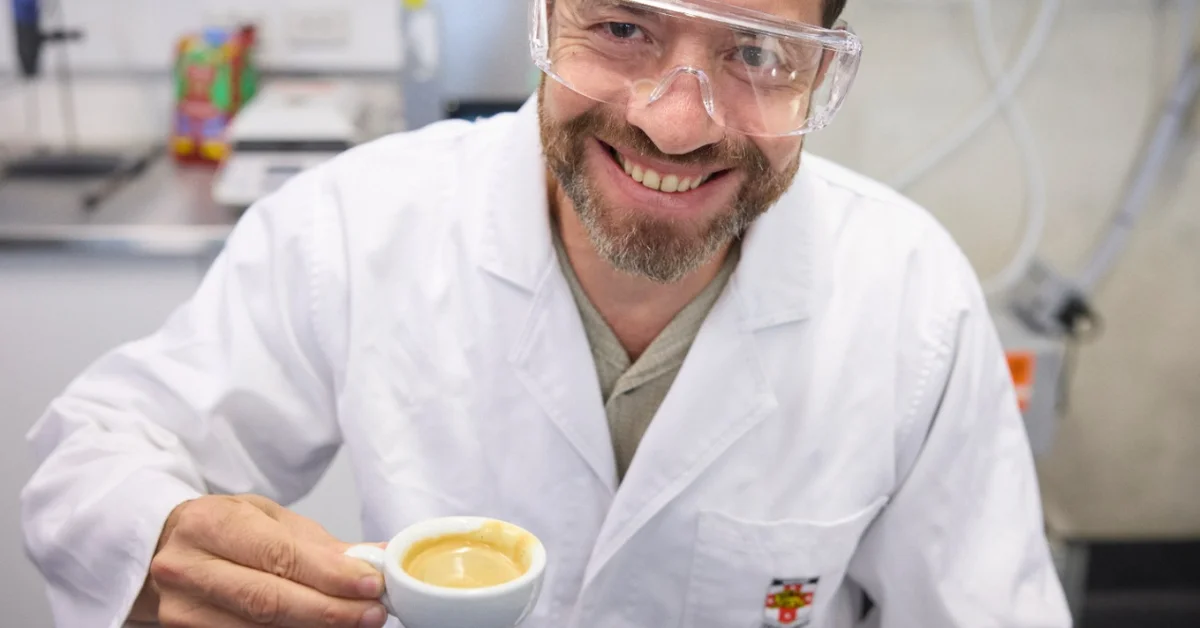
UNSW espresso research in Kensington has produced a room-temperature brewing method that uses ultrasonic sound waves to make concentrated coffee comparable with traditional espresso while cutting energy use by up to 75 per cent.
Sound Waves Replace Heated Water
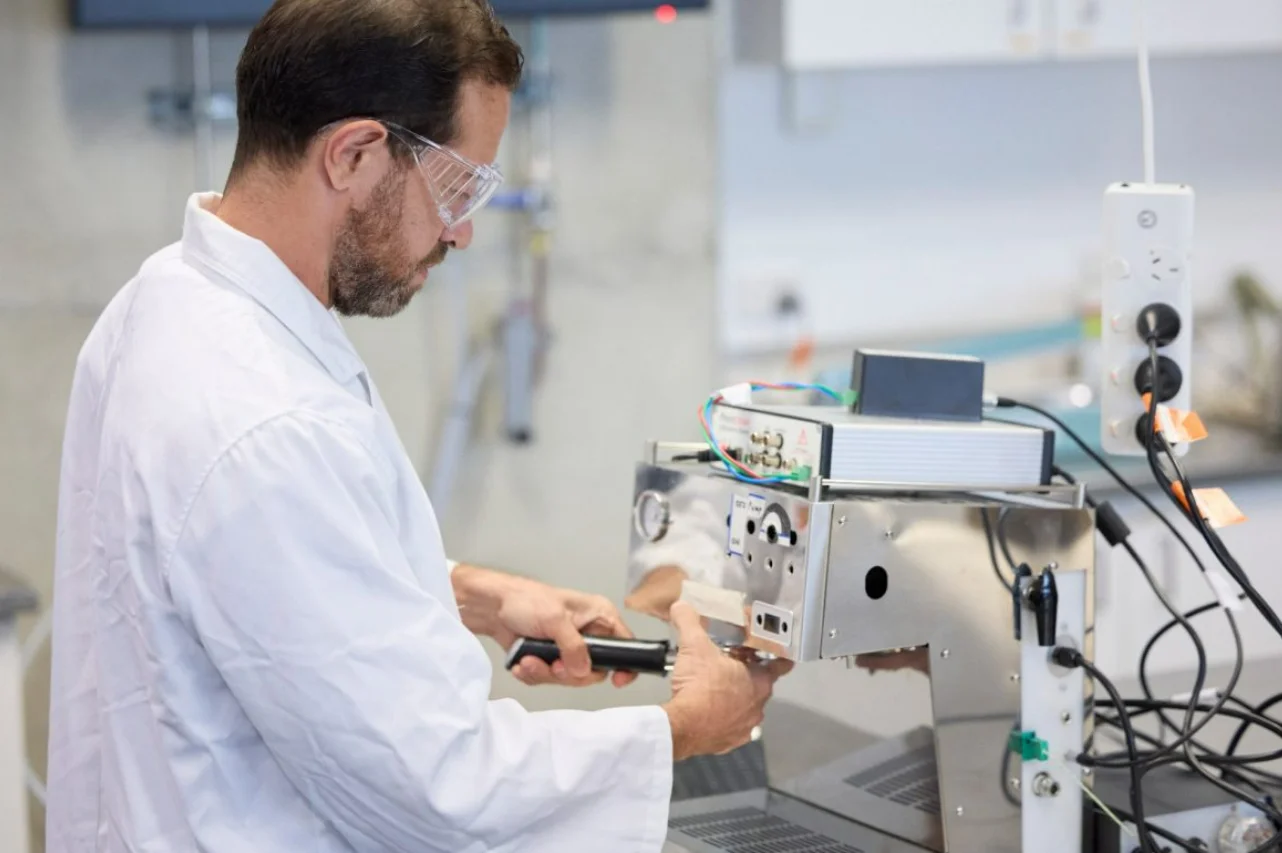
Researchers from UNSW Sydney’s School of Chemical Engineering developed the process as an alternative to the hot water and pressure traditionally used to extract espresso.
The system sends high-frequency sound waves through ground coffee and room-temperature water, helping to release flavour, aroma, oils and caffeine. It can produce an espresso-strength drink in about two-and-a-half to three minutes.
The research, published in the Journal of Food Engineering, follows earlier work by the team on an ultrasonic cold-brew process. That method reduced a brewing process that commonly takes between 12 and 24 hours to as little as three minutes.


Cold brew, however, has a different flavour and a substantially lower caffeine concentration than espresso. The researchers therefore adjusted the system to produce a stronger and more concentrated drink without heating the water.
How UNSW Espresso Research Works
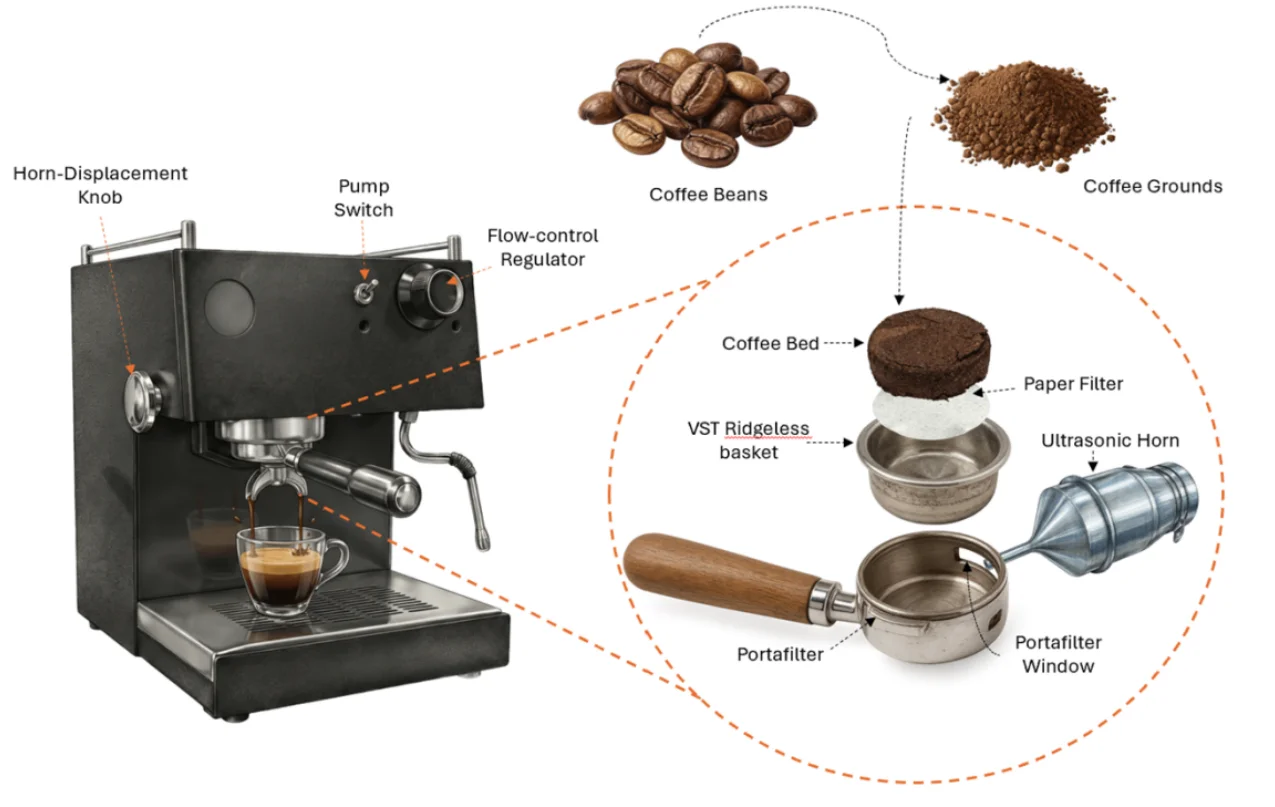
A traditional coffee filter basket was adapted to act as an ultrasonic reactor. A small metal transducer placed against the basket generates sound waves beyond the range of human hearing, causing the basket, coffee grounds and water to vibrate rapidly.
The vibrations create acoustic cavitation, in which microscopic bubbles rapidly form and collapse in the liquid. Near the coffee particles, the collapsing bubbles pit and fracture the grounds, allowing soluble compounds to enter the water more quickly.
Researchers examined factors including the amount of water used for each gram of coffee, the fineness of the grind and the length of time the ultrasound was applied. A finer grind accelerated extraction, while a brewing time of between two-and-a-half and three minutes produced the most balanced result.
One test used 20 grams of coffee to produce a 40-gram drink. Room-temperature water was passed through the coffee bed in five intervals during the two-to-three-minute brewing cycle.
Regular Coffee Drinkers Compare The Results
About 100 people who drank coffee at least once a week participated in a randomised sensory test. They were everyday consumers rather than trained coffee assessors.
Four drinks were prepared: traditional espresso, ultrasonic espresso, traditional filter coffee and ultrasonic filter coffee. Each was freshly made, cooled to the same temperature and served in identical coded cups presented in a random order.
Participants rated aroma, flavour, bitterness and overall enjoyment on a nine-point scale. The traditional and ultrasonic espresso samples recorded no significant differences across the tested measures, with most participants unable to distinguish reliably between them and no clear preference emerging.
The ultrasonic filter coffee performed more strongly than its traditionally brewed counterpart. Participants gave it a higher overall rating and assessed its bitterness more favourably.
Industrial Coffee Production Offers A Larger Use
Removing the need to heat brewing water reduced energy consumption by up to 75 per cent. While the process could be incorporated into an automatic machine for household use, the researchers identified larger-scale coffee production as its main potential application.
The system can produce concentrated coffee for ready-to-drink products or create a concentrate that can be transported and later diluted for cold brew and milk-based drinks.
Scaling the method for industrial production could allow manufacturers to reduce both processing time and the energy required to prepare concentrated coffee.
Published 10-July-2026