

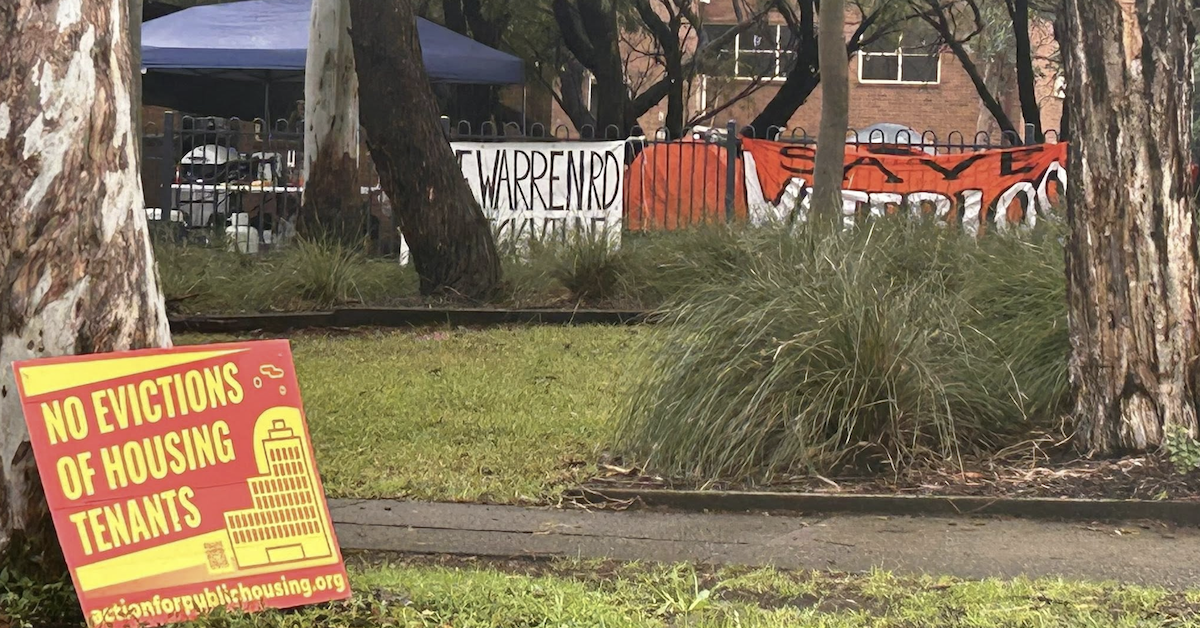
Demolition fencing around lived-in apartment blocks in Waterloo South has sparked a community blockade. The protest temporarily stopped construction and led to a push to halt the works entirely.
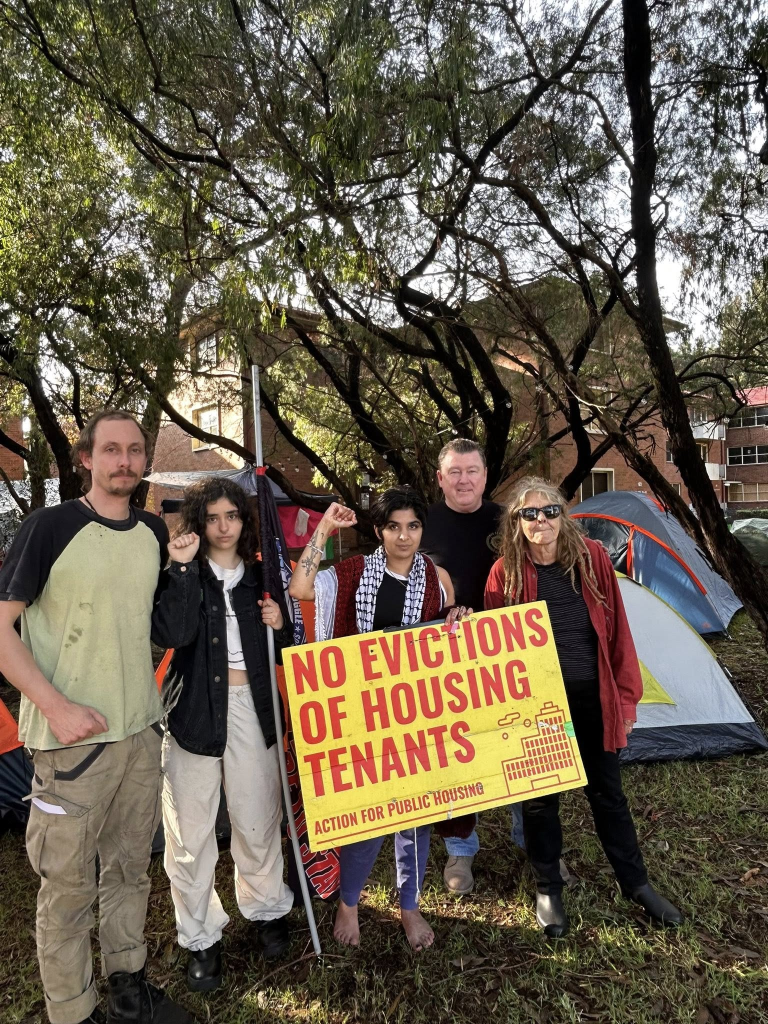
The standoff grew tense after estate residents received official moving and demolition notices earlier this month. Demolition crews arrived on site on 25 May, but advocacy group Action for Public Housing says 15 tenants were still living in the buildings marked for bulldozing.
The night before, around 200 residents and supporters gathered to camp out on the property. They carried signs reading “Housing is a human right” and “Stop demolishing public housing.” On 25 May, the blockade successfully stopped workers from putting up fences. Residents said the barriers would have blocked remaining tenants from their shared backyards and car parks.
The Sydney branch of the Maritime Union of Australia later backed the protest.
Blockade Stops Construction Crews
A crowd of locals and supporters set up camp at the site the night before workers arrived. On Monday 25 May, the blockade successfully stopped crews from putting up perimeter fences. Residents argued the planned fences would cut off the remaining tenants from their shared backyards and parking spots.
For long-term residents watching machinery and workers arrive at nearby buildings, the situation has caused a lot of worry. A spokesperson for the resident group said the demolition notices went out while several tenants were still waiting to be given new places to live.
One resident explained how the stress of the situation is seriously harming his health, pointing out that the buildings around him are already being fenced off for demolition. He shared that the entire ordeal has caused his anxiety to skyrocket, forcing him to increase his daily doses of medication, including insulin and antidepressants, just to cope with the pressure.
Moving Plans and Parliament Debate
The official word from Homes NSW is that they start the moving process early. This is meant to give housing staff enough time to work one-on-one with tenants to find them the right homes.
The agency says its goal is to put as many eligible residents as possible into brand-new buildings as they are finished. They are also using homes in nearby areas like Redfern and Glebe for housing placements.
The dispute reached parliament when Ms Jenny Leong brought a motion to the NSW Legislative Assembly. The motion called for an immediate stop to all demolition work on the site.
A major point of argument in the motion was a breakfast radio interview broadcast on the morning the crews arrived. During the broadcast, it was claimed that the targeted buildings were already completely empty. Community advocates and residents strongly disagree, insisting that 15 tenants are still in their homes.
Project Size and Future Steps
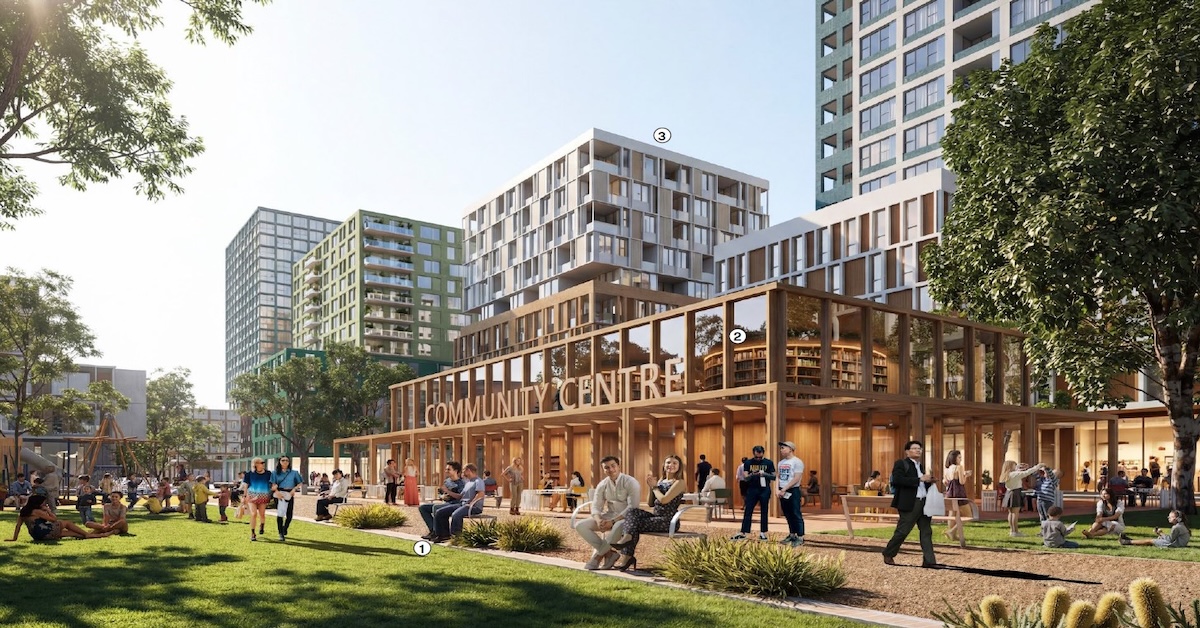
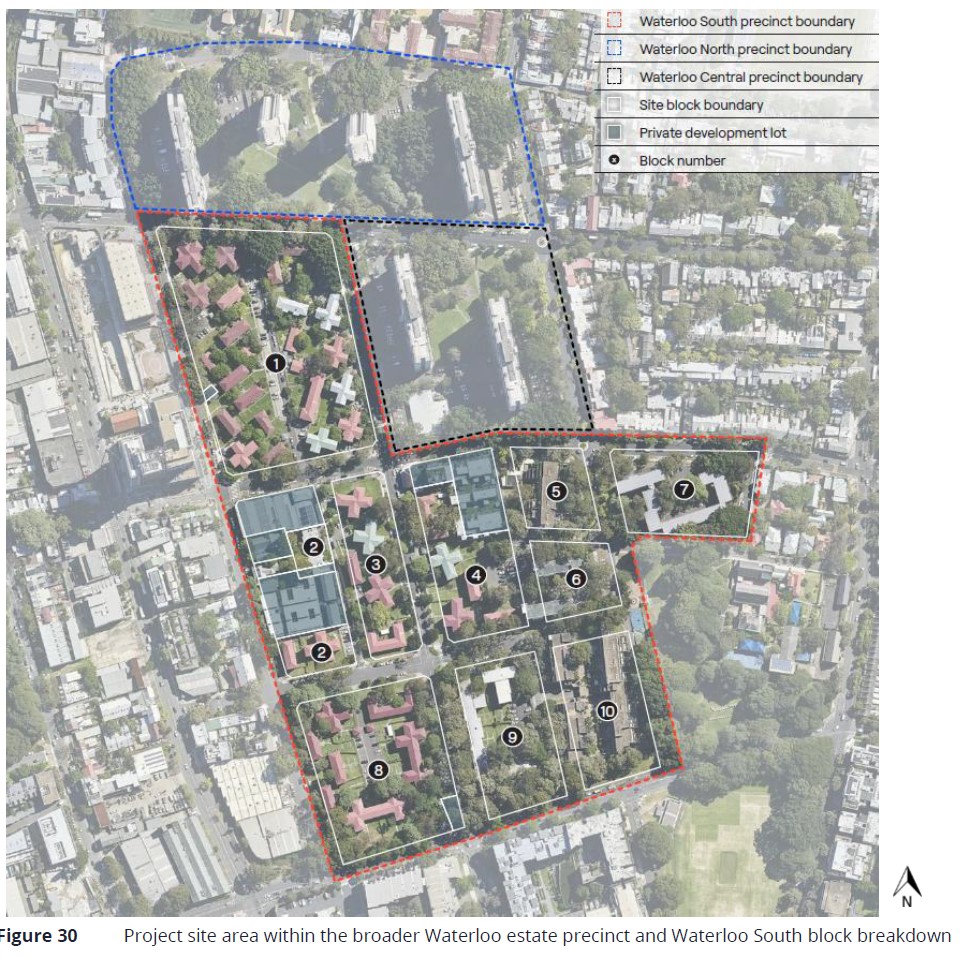
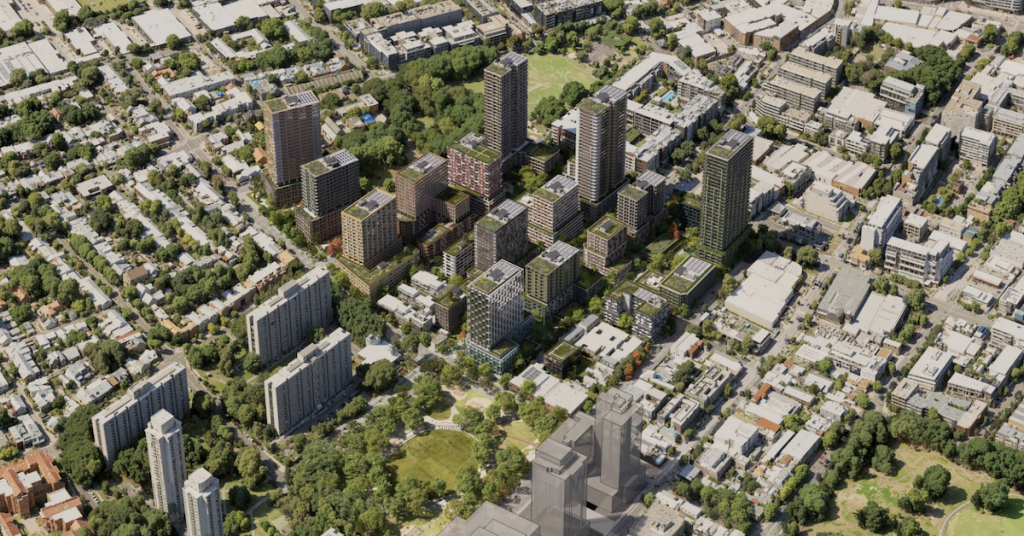
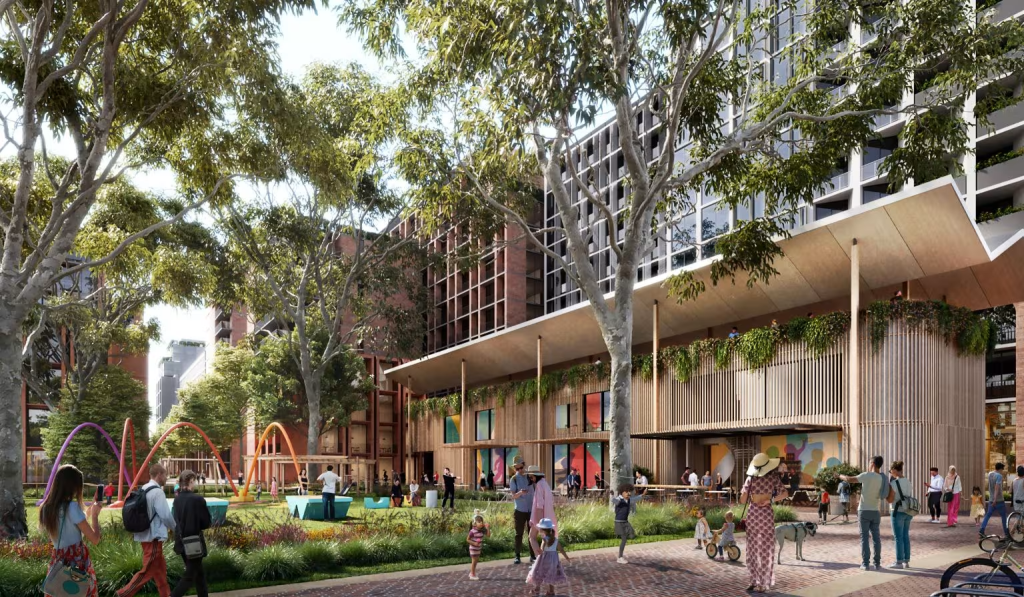
The work is the first stage of the Waterloo Renewal Project, a long-term plan to rebuild one of Australia’s largest public housing estates. State planning maps show the project covers land between John, Cope, McEvoy, and Mead streets.
The current master plan outlines the construction of about 3,000 new homes. This will change the site from 100% public housing to a mixed model made up of:
- 30 per centsocial housing
- 20 per centaffordable housing
- 50 per centprivate housing
The first phase targets more than 130 low-rise units for demolition, with more buildings scheduled to be cleared over the next 12 to 15 months. Project documents estimate the full rebuild will take between 10 and 15 years.
While housing advocates wonder why structurally safe low-rise buildings are being torn down during a housing shortage, Homes NSW stands by the plan. They argue that high-density housing is needed to provide modern, energy-efficient homes and increase the overall number of places to live in the inner city.
Protesters and community networks say they plan to keep up their physical presence at the site as the project moves forward. A rally and press conference were also held at Martin Place to bring wider public attention to the tenancy issues.
Independent tenant advice and help with legal rights during the Waterloo redevelopment are available through the Redfern Legal Centre on (02) 9698 7277 or via their website.
Published 29-May-2026